New Ford F-550SD For Sale in Fayetteville, NC


Frequently Asked Questions About New Ford F-550SD in Fayetteville, NC
Should I choose a service body or a flatbed on an F-550?
A service body suits crews that carry many tools and parts and need them organized and locked. A flatbed works for crews that haul pallets, equipment or materials that load from the side or with a forklift. Some crews choose a combination body that offers a little of both.
Can a dump body be added to an F-550 chassis cab?
Yes, dump bodies are a common upfit on this chassis. The body builder will recommend a style based on what you haul and how you unload it. Ask about side access and tailgate styles as well.
Is the F-550 used for tow trucks and rollbacks?
Yes, many towing and recovery operators build rollbacks and wreckers on this chassis. The recovery equipment comes from specialized builders who work with the chassis. We can coordinate with the builder you prefer.
Who handles questions about body ratings and dimensions?
Those questions should go to the dealership and the upfitter together, since they depend on the exact chassis and body combination. We will not guess at figures for your specific truck.
How can I keep downtime short when my work truck needs service?
Schedule routine maintenance during slower periods and report small problems early. Let our service team know how the truck is used so visits can be planned around your work. Keeping a spare vehicle available for busy weeks also helps.
Have Additional Questions?
Chassis cab projects go faster when the work is described clearly from the start.
What does your crew haul, and how does the truck spend its day? Those answers let LaFayette Ford help plan the chassis and body.
Contractors, utility crews and recovery operators can all start with a phone call.
Why Trades Choose a Chassis Cab Over a Pickup Bed
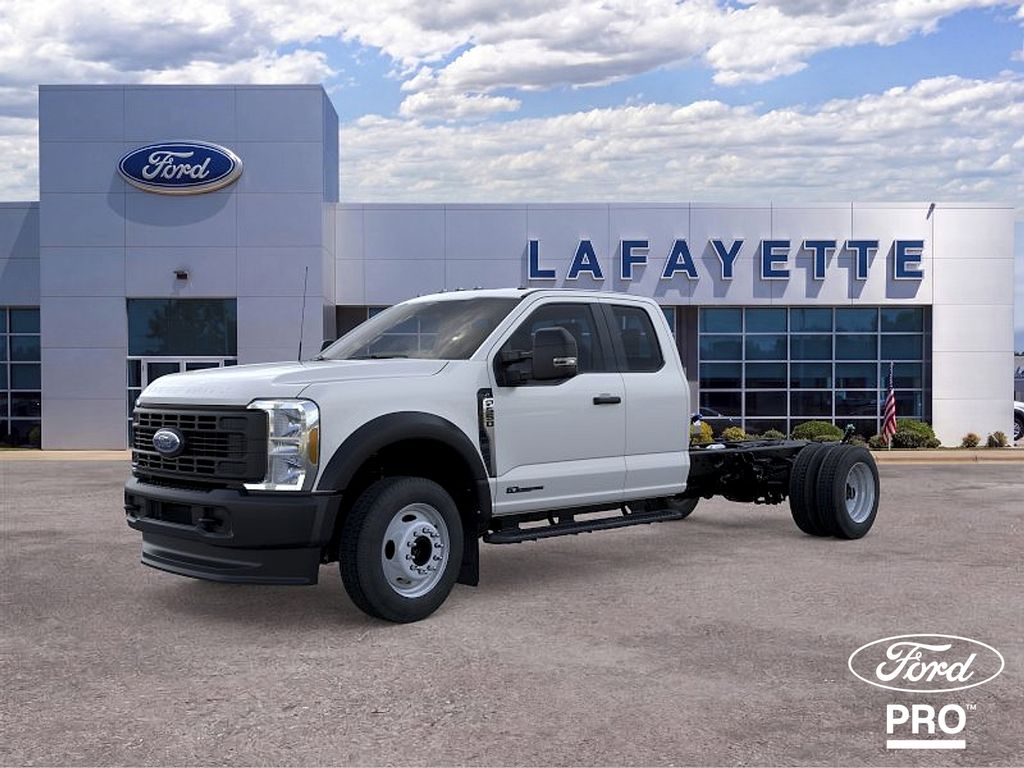
A pickup bed works well until the job outgrows it. Crews that carry tools, materials or equipment every day in Fayetteville often need a body designed around their work. The Ford F-550 Super Duty chassis cab gives them a bare frame behind the cab, ready for the body that fits the trade. Many crews in the area already run one and plan the next truck around it.
That changes how a truck supports a business. Instead of fitting the work into a bed, the body is built around the work itself. LaFayette Ford helps contractors, utility crews and recovery operators think through that choice before the truck is ordered, because the body decides how useful the truck will be for years.
- A chassis cab lets a business choose a body built for its trade, from locking tool compartments to a dump bed, instead of adapting its work to a standard pickup box.
- Crews that were overloading a pickup bed and stacking gear on racks often find that a purpose-built body keeps tools organized and reduces time spent searching on the job site.
- Businesses that expect to keep a truck for many years can choose a body that suits their long term plans, since the chassis and body work together for the life of the truck.
The first step is describing the work clearly. What does the truck carry, how often, and where does it go? Those answers point toward a suitable body and the chassis equipment to match it. A few photos of your current setup can help too.
Bring a picture of a typical workday to the conversation. LaFayette Ford can help translate it into chassis and body decisions. That makes the rest of the process much smoother.
Service Bodies for Utility and Mechanic Crews
Service bodies are one of the most common choices for an F-550 chassis cab. Side compartments keep tools and parts organized and locked, while the center area can carry larger equipment. Many of them also accept a crane for lifting heavy components. The layout is usually decided by how often each tool is used.
Utility contractors, field mechanics and equipment technicians rely on these trucks as rolling workshops. The body layout affects how quickly a crew can find what it needs on a call. Thinking through that layout before ordering pays off every day afterward. Crews usually know exactly which compartment they reach for first.
- Locking side compartments protect tools and parts from weather and theft, which matters for crews who leave a truck parked at job sites or outside a home overnight.
- A crane mounted on a service body lets a single technician lift heavy components such as motors or pumps, saving time and reducing strain on the crew during field repairs.
- Ladder racks, work lights and pull-out storage drawers are common additions to a service body, and planning them with the upfitter at the start avoids expensive modifications later.
The upfitter designs the service body around the chassis and the work. We can coordinate the chassis order so it arrives with the right equipment for the body. Specific body dimensions and ratings are confirmed jointly by our team and the upfitter for your exact order.
A service body should fit the way your crew works. LaFayette Ford will help you coordinate the chassis and the body so the finished truck is ready for the job. Ask us to start that conversation.
Dump Bodies for Landscaping and Site Work
Landscapers, grading contractors and site crews often choose a dump body on the F-550. It handles mulch, gravel, soil and debris without shoveling by hand. For crews working the neighborhoods around Gray's Creek and Vander, that capability saves real time on every load. Fewer trips to the supply yard mean more billable hours.
Dump bodies come in different styles, and some add fold-down sides or a tool box up front. The right choice depends on what the crew hauls and where it unloads. The body builder will guide those details once the job is clear.
- Landscaping crews working new subdivisions around Gray's Creek use dump bodies to deliver mulch and stone quickly, which lets a small crew finish more properties in a day.
- Fold-down sides on some dump bodies make it easier to load equipment or materials from the side, which is helpful on tight residential sites with limited access.
- A storage box mounted between the cab and the dump body keeps shovels, rakes and hand tools with the truck, so nothing gets left behind at the end of a job.
Dump trucks work hard, and the chassis needs regular attention to keep up. Hydraulics belong to the body, while the chassis systems are serviced here. Keeping both on schedule helps prevent a breakdown in the middle of a busy season. Report any hydraulic leak near the chassis quickly.
If your crew moves material every day, a dump body may be the right fit. LaFayette Ford can help you plan the chassis side of that truck. Tell us what you haul most often.
Recovery Trucks Working the Interstate
Towing and recovery operators rely on chassis cabs for rollbacks and wreckers. Operators who cover the interstate corridor through Cumberland County need trucks that can respond quickly and handle a wide range of vehicles. The body and equipment are specialized, but the chassis underneath still has to be dependable.
Rollback beds are popular because they can carry vehicles without towing them on their wheels. Wreckers with booms and wheel lifts handle other situations. Many operators run a mix of both to cover different calls. The right choice depends on the calls you answer most.
- Rollback beds carry disabled vehicles on a flat deck, which protects damaged or low vehicles and makes them a common choice for operators working busy highway calls.
- Wrecker bodies with a boom and wheel lift let operators recover vehicles from ditches and tight spots where a rollback cannot easily reach the car.
- Recovery trucks spend many hours idling at scenes with lights running, so keeping the chassis maintenance current helps prevent problems during a long night of calls.
Recovery equipment comes from specialized builders, and we will help coordinate with the one you choose. Licensing, lighting and equipment requirements depend on how the truck will be used. We will point you toward sources that can confirm them.
Recovery work demands a truck that is always ready. LaFayette Ford can help you plan and support the chassis behind your rollback or wrecker. Reach out when you are ready to add a truck.
Keeping a Working Truck Out of the Shop
A work truck that is down costs a business money every day it sits. Regular maintenance on the chassis is the most reliable way to prevent unplanned downtime. Following the severe duty schedule makes sense for trucks that haul, idle or run short trips all day. Long idling at job sites falls into that category for many trucks.
Our service department understands that commercial customers need their trucks back quickly. Scheduling maintenance ahead of busy seasons helps keep the fleet on the road. Describe the truck's daily duty and service can be booked around your calendar.
- Scheduling routine chassis maintenance during slower weeks helps a business avoid losing a truck during the busiest part of its season, when every day of work counts.
- Keeping a record of service for each truck makes warranty claims easier and helps a business track costs across its fleet from one year to the next.
- Reporting small problems early, such as a new vibration or warning light, often prevents a larger repair that would keep the truck off the road longer.
We will not guess at specifications, capacities or configurations for a particular job. Our commercial team and your upfitter confirm those details for the exact truck being built. That keeps your investment protected. Getting those answers in writing protects everyone involved.
Paired with a body that suits the trade and steady maintenance, an F-550 chassis cab can work for a business for many years. LaFayette Ford can help with the planning now and the upkeep later. Contact us to talk about your next truck.
A service body, a dump bed and a rollback all start from the same chassis. LaFayette Ford can help you plan an F-550 around the work your business does.